Pet diary


Pyoderma is one of the most common reasons dogs are brought to a vet. It is classified as surface, superficial, or deep, and is frequently a secondary infection to allergies or other underlying conditions. Treating the root cause is essential to prevent recurrence.
Read more

Demodicosis is caused by overgrowth of Demodex canis mites normally resident in dog hair follicles. It is not contagious through normal contact to people or healthy dogs. It is classified as localised (often self-limiting) or generalised (requires active treatment), and must be confirmed by skin scraping with a full treatment course.
Read more

Flea allergic dermatitis (FAD) is one of the most common causes of itch in dogs and cats. Highly sensitive pets can react to just 1–2 flea bites. "No fleas visible" does not rule out this condition — 90% of fleas live in the environment, not on the pet.
Read more
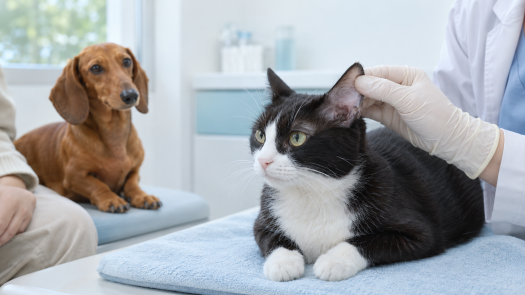
Ear mites (Otodectes cynotis) infest the ear canals of dogs and cats, causing intense itching and characteristic dark "coffee-ground" discharge. All pets in the household must be treated simultaneously to prevent reinfection.
Read more
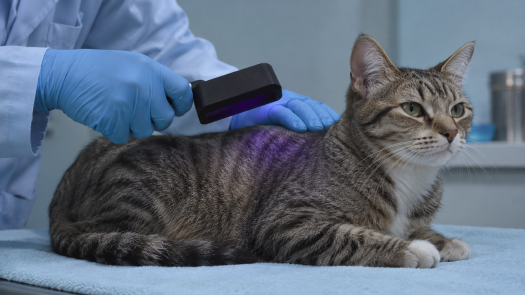
Ringworm (dermatophytosis) is a fungal infection — not caused by a worm — and is contagious to people and other animals. Some cats are asymptomatic carriers. Learn about diagnosis, whole-body treatment, and home isolation measures.
Read more
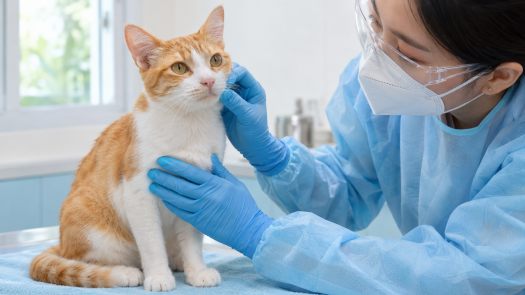
Feline sporotrichosis is caused by Sporothrix fungi and can be transmitted to humans through cat scratches. Contact the hospital before bringing your cat in. Learn to recognise symptoms, understand transmission risk, and follow safe home handling practices.
Read more