Ear Mites in Dogs & Cats: Signs, Transmission & Treatment Guide

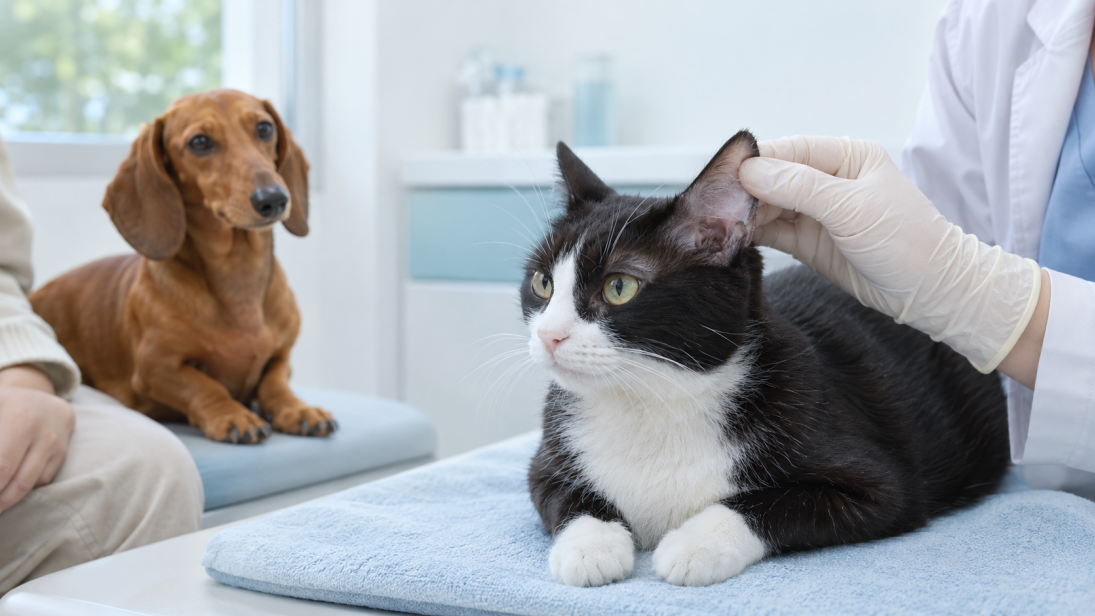
Ear mite infestation is caused by Otodectes cynotis, a mite that lives in the ear canals of dogs and cats. It causes significant discomfort and is especially common in kittens and multi-pet households.
Signs to Watch For
- Intense scratching at the ear and frequent head shaking
- Dark brown or black discharge in the ear canal resembling coffee grounds — the hallmark sign of ear mites
- Skin abrasions or broken skin around the ear, sometimes with swelling
- Some dogs may also scratch and shake their heads
⚠️ Note: Dark discharge in the ear does not automatically mean ear mites — a veterinary examination is needed to confirm, as bacterial or yeast infections can appear similar.
How Ear Mites Spread: Otodectes cynotis spreads through direct contact between pets. Dogs can acquire ear mites through close contact with infected cats. Mites can survive briefly outside the ear canal, so all pets in the household should be examined — even those without obvious symptoms.
Diagnosis: Your vet will examine the ear canal and inspect the discharge under a microscope to confirm the presence of mites. The examination also helps identify any concurrent yeast or bacterial infections, which may require additional treatment.
Treatment — Covering Both Pets and Environment: Medication for all pets (using an appropriate anti-mite product suited to the species and age — all pets in the household must be treated at the same time); ear cleaning (your vet will guide you on proper technique and address any secondary infections); wash bedding and shared items to reduce the risk of reinfection.
Home Care: Complete the full course of treatment and attend follow-up appointments; wash pet bedding and disinfect shared items; 🚫 do not insert cotton swabs deep into the ear; 🚫 do not use oils, alcohol, or unprescribed ear drops.
Prognosis: Most cases resolve fully with complete treatment. Reinfection is possible if the pet comes into contact with an infected animal again. Transmission to humans is very rare but may cause brief skin irritation.
When to Seek Immediate Care: Severe ear pain, swollen ear flap, strong odour, or discharge with pus; head tilt or loss of balance — requires urgent attention.
Contact Thonglor Pet Hospital
Have questions about veterinary care for your pet in Thailand? Contact our team to ask about services, find a suitable branch or arrange an appointment.
If you need English-speaking assistance, please let us know when booking so we can confirm availability.
Book an appointment: Schedule your visit
Call us: +66 2 079 9999
LINE: @jaothonglor
Find a location: Explore our branches
For information about opening hours, treatment costs and preparing for your visit, see our Frequently Asked Questions.
Related in This Category

Did You Know Dogs Can Suffer from Acid Reflux?
My Cat is Lethargic and Refusing Food: What Should I Do? A Guide to Caring for a Sick Cat
Is eating too much wet food dangerous for cats? At what age can they start?

Bad Breath in Dogs and Cats: A Warning Sign You Should Never Ignore