Feline Atopic Skin Syndrome (FASS): 4 Presentations, Signs & Care

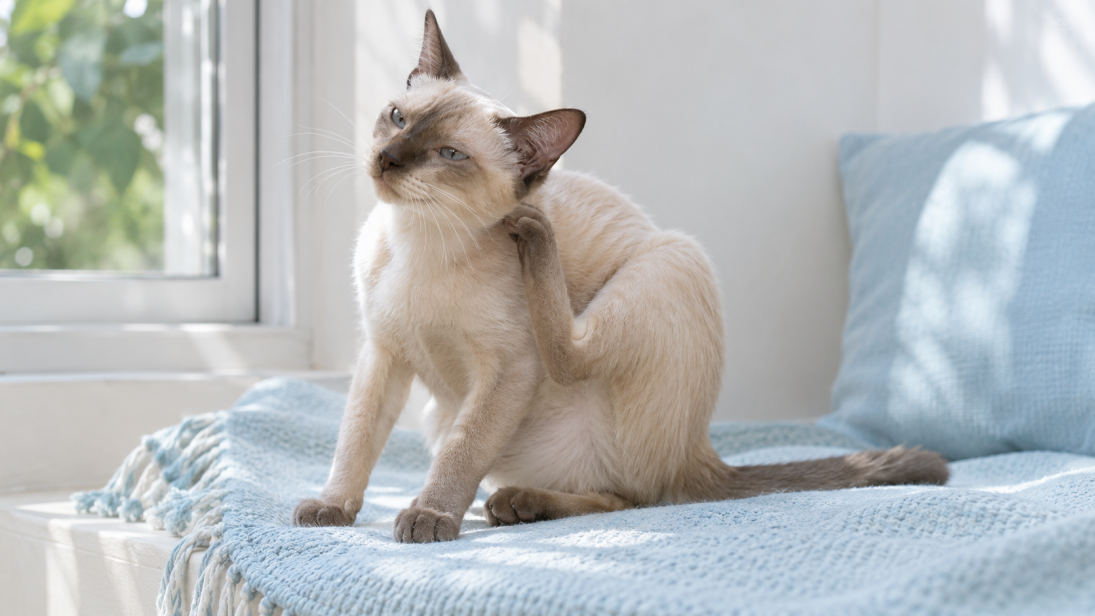
Feline Atopic Skin Syndrome (FASS) is a group of inflammatory skin conditions associated with immune reactions to environmental allergens in cats. FASS is not contagious to people or other pets, but it must be distinguished from other conditions through a veterinary examination.
⚠️ Important: The 4 presentations below can also be caused by flea allergy, food allergy, fungal infections, and parasites — do not self-diagnose. A veterinary examination is essential.
The 4 Presentations of FASS in Cats
1. Head and Neck Pruritus: The cat frequently scratches or paws at the face, ears, and neck, causing hair loss and skin lesions.
2. Self-Induced Alopecia: Excessive licking, biting, or chewing of the coat causes hair breakage and thinning — commonly seen on the abdomen, flanks, and inner thighs. Always rule out medical causes before attributing hair loss to psychological stress.
3. Miliary Dermatitis: Multiple tiny crusted papules appear across the skin, often more noticeable by touch than by sight, and may be widespread across the body.
4. Eosinophilic Granuloma Complex: Includes Eosinophilic plaque (raised, red, moist lesions), Indolent ulcer / Rodent ulcer (ulceration of the upper lip), and Eosinophilic granuloma (firm, raised nodules).
Causes and Diagnosis: Your vet will investigate in this order: rule out parasites, fungi, and infections; confirm flea control is complete and consistent; consider a food elimination trial if warranted; allergy testing is used to support diagnosis — not to confirm it alone.
Treatment: Cat-specific medications are used to control itch and inflammation, while infections and trigger factors are addressed concurrently. ASIT may be an option for some cases. 🚫 Never give dogs’ anti-allergy medications to cats — some drugs safe for dogs are potentially fatal to cats.
Home Care: Apply comprehensive flea prevention to all pets in the household; keep a log of licking behaviour and photograph skin changes regularly; follow any food elimination trial strictly; do not assume hair loss is stress-related without veterinary evaluation.
When to Seek Urgent Care: Deep wounds, difficulty eating, or severe lethargy; difficulty breathing or open-mouth breathing — emergency, seek immediate care.
Contact Thonglor Pet Hospital
Have questions about veterinary care for your pet in Thailand? Contact our team to ask about services, find a suitable branch or arrange an appointment.
If you need English-speaking assistance, please let us know when booking so we can confirm availability.
Book an appointment: Schedule your visit
Call us: +66 2 079 9999
LINE: @jaothonglor
Find a location: Explore our branches
For information about opening hours, treatment costs and preparing for your visit, see our Frequently Asked Questions.
Related in This Category

Did You Know Dogs Can Suffer from Acid Reflux?
My Cat is Lethargic and Refusing Food: What Should I Do? A Guide to Caring for a Sick Cat

Is eating too much wet food dangerous for cats? At what age can they start?

Bad Breath in Dogs and Cats: A Warning Sign You Should Never Ignore