3 Main Reasons Your Pet’s Chronic Skin Disease Won’t Go Away


3 Main Reasons Why Your Pet’s Chronic Skin Disease Never Seems to Go Away
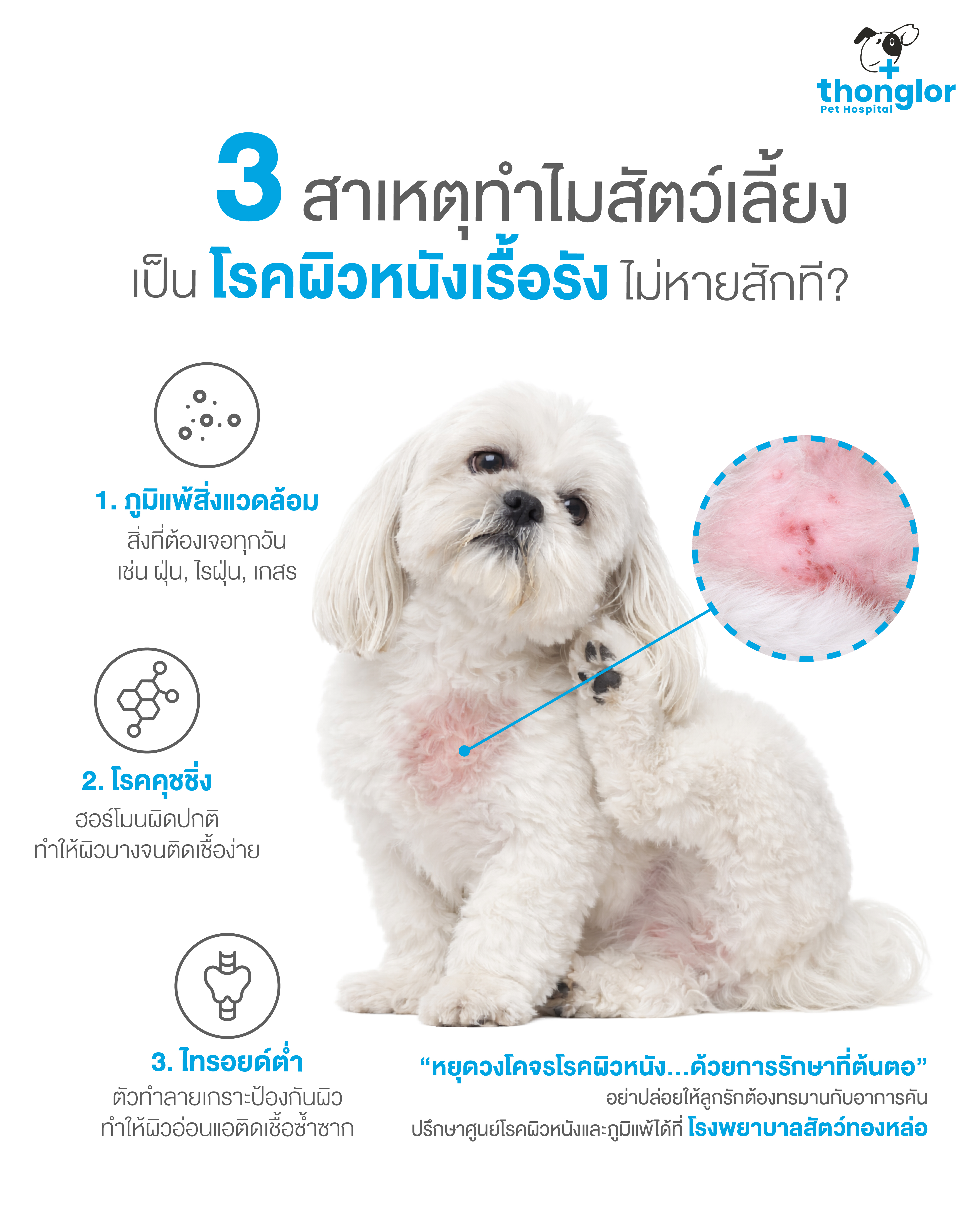
Many pet owners are struggling with "Chronic Skin Diseases." No matter how many times you visit the vet, apply ointments, or give them medication, the symptoms only improve briefly before returning. This endless cycle often happens because we haven't addressed the "Root Cause" of the problem.
Today, we will dive into the 3 hidden causes that keep your pet in a cycle of persistent skin issues.
1. Environmental Allergies (Atopy)
"The Invisible Enemy"
Daily triggers that your pet encounters—such as dust mites, pollen, or mold spores—are major culprits.
Symptoms: Intense itching, especially around the face, paws, and underbelly.
The Cycle: Continuous scratching or licking leads to open wounds, which then become infected by bacteria or yeast.
The Solution: Without managing the allergy or conducting an Allergy Test to identify and avoid specific triggers, the skin infections will return indefinitely.
2. Cushing’s Disease
"When Hormones Weaken the Skin"
This condition occurs when the body produces excessive levels of Cortisol, which directly impacts the skin's integrity.
Symptoms: Abnormal hormone levels cause the skin to become extremely thin, often making blood vessels visible.
The Cycle: Thin skin loses its natural protective barrier, making it significantly more susceptible to infections and inflammation than healthy skin.
Other Signs to Watch For: Increased thirst, frequent urination, and a "pot-bellied" appearance.
3. Hypothyroidism
"The Internal Barrier Destroyer"
When thyroid hormone levels are lower than normal, it slows down the skin's ability to repair and regenerate cells.
Symptoms: Weakened skin, patchy hair loss (often starting at the trunk or tail), and skin that becomes dark and thickened.
The Cycle: The skin's protective barrier remains permanently compromised as long as hormone levels are unbalanced. Even if you treat the surface infection with antibiotics, it will return because the internal cause remains unaddressed.
Q&A: Chronic Skin Issues in Pets
Q: Why do my pet's skin problems keep coming back despite treatment? A: In many cases, treatment only focuses on "surface symptoms" like using antibiotics or anti-itch medications. If the "root cause"—such as environmental allergies or hormonal imbalances (Cushing’s Disease or Hypothyroidism)—isn't addressed, the symptoms will inevitably return once the medication is stopped.
Q: How can I tell if my pet has "allergies" rather than just a simple skin infection? A: If your pet experiences intense itching around the face, paws, or underbelly, it’s a strong indicator. You might notice a seasonal pattern (e.g., reacting to pollen) or persistent itching even when the skin looks clean. These are classic signs of Atopy (Environmental Allergies), which often require a blood test to identify specific triggers.
Q: What does "thin skin with visible blood vessels" indicate in dogs and cats? A: This is a major red flag for Cushing’s Disease (Hyperadrenocorticism), where the body produces too much cortisol. This hormone excess causes the skin to atrophy (thin out), destroying its natural protective barrier. It leads to chronic infections and is often accompanied by increased thirst, frequent urination, and a "pot-bellied" appearance.
Q: How does Hypothyroidism affect a pet's skin and coat? A: Hypothyroidism slows down the body's ability to repair and regenerate skin cells. This results in patchy hair loss (often starting at the tail or trunk), thickening of the skin, and dark pigmentation (hyperpigmentation). Without stabilizing the thyroid hormones, skin infections will keep recurring because the internal "shield" remains broken.
Q: What is the best starting point to finally cure chronic skin disease? A: The most effective approach is a "Root Cause Analysis" performed by a veterinary dermatologist. By identifying whether the issue is allergic, hormonal, or infectious, you can create a targeted treatment plan. This not only solves the problem for good but also saves on long-term medical costs.
"Break the Cycle... by Treating the Root Cause"
Don't let your beloved pet suffer from constant itching that ruins their personality and quality of life. Treating only the "external symptoms" is rarely the final answer. Root Cause Analysis is the best path forward to restoring your pet's healthy skin for the long term.
Consult Our Specialists
Create a precise and effective treatment plan with our experts today at: Dermatology & Allergy Center | Thonglor Pet Hospital (All Branches)
Contact Thonglor Pet Hospital
Have questions about veterinary care for your pet in Thailand? Contact our team to ask about services, find a suitable branch or arrange an appointment.
If you need English-speaking assistance, please let us know when booking so we can confirm availability.
Book an appointment: Schedule your visit
Call us: +66 2 079 9999
LINE: @jaothonglor
Find a location: Explore our branches
For information about opening hours, treatment costs and preparing for your visit, see our Frequently Asked Questions.
Related in This Category

Did You Know Dogs Can Suffer from Acid Reflux?
My Cat is Lethargic and Refusing Food: What Should I Do? A Guide to Caring for a Sick Cat

Is eating too much wet food dangerous for cats? At what age can they start?

Bad Breath in Dogs and Cats: A Warning Sign You Should Never Ignore