5 Critical Warning Signs of Diabetes in Dogs and Cats


5 Warning Signs of Diabetes in Dogs and Cats You Must Not Ignore!
Diabetes isn't only a concern for humans; our beloved pets are equally susceptible. If left untreated, it can lead to life-threatening complications. Check these 5 early symptoms to assess your pet's risk today.
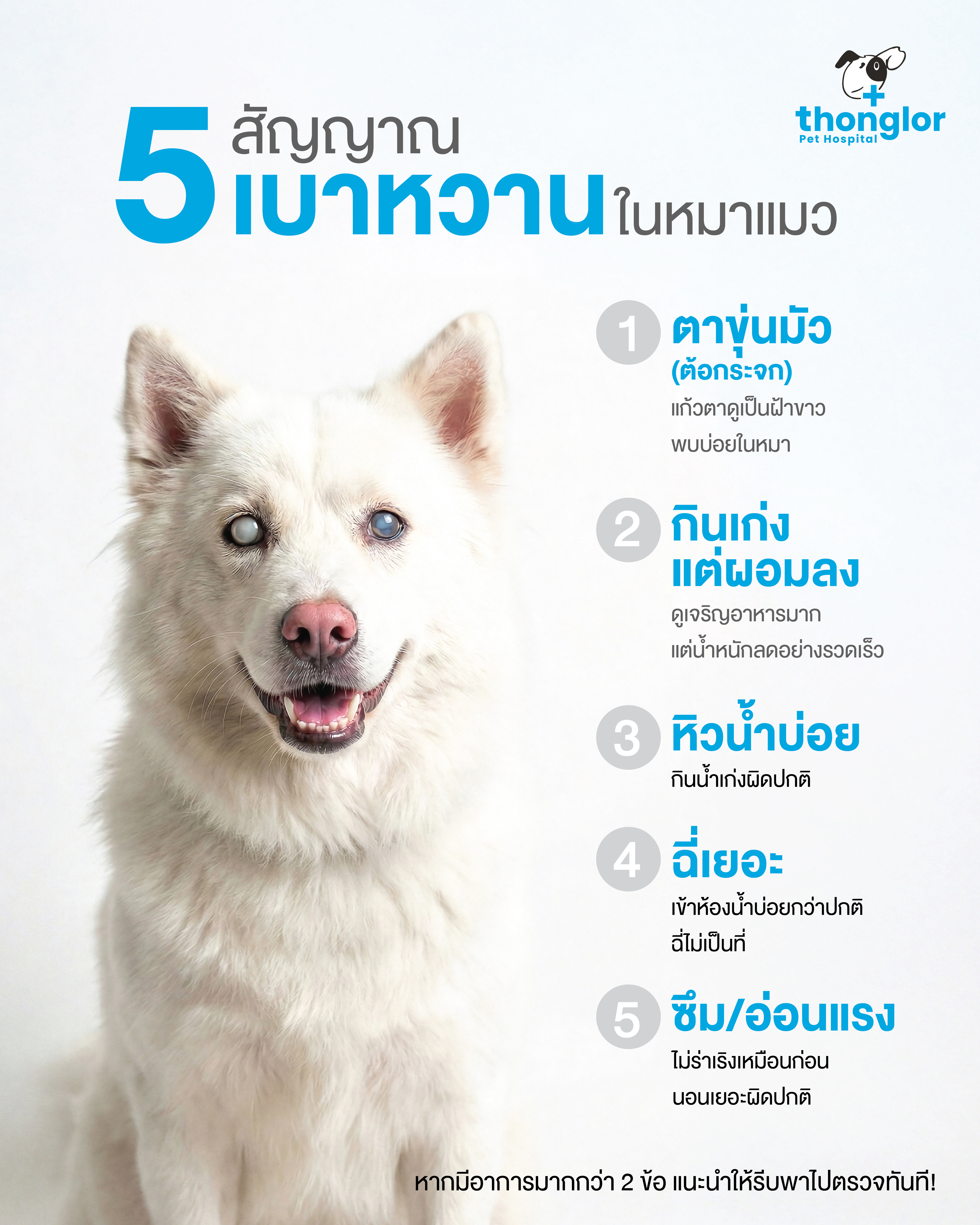
The 5 Red Flags: Is Your Pet at Risk?
1. Cloudy Eyes (Cataracts)
Excessive blood sugar levels disrupt the nutrient balance within the eye lens, leading to "Cataracts." You may notice a white, cloudy haze in your pet's eyes, causing blurred vision or blindness.
Note: This is very common in dogs but rare in cats. If a cat has cloudy eyes, it is likely caused by other conditions that require immediate attention.
2. Weight Loss Despite a Healthy Appetite (Polyphagia)
When the body lacks insulin, it cannot convert blood sugar into energy. As a result, the body begins burning fat and muscle for fuel. You will notice your pet eating more than usual while simultaneously losing weight.
3. Excessive Thirst (Polydipsia)
When blood sugar is high, the body tries to flush it out through urine, taking a large amount of body water with it. This leads to intense thirst, causing your pet to drink water constantly to compensate for the loss.
4. Frequent or Inappropriate Urination (Polyuria)
In addition to urinating more frequently and in larger volumes, keep an eye on the urine itself. If you notice ants around the urine or a sticky residue after it dries, it is a clear sign of sugar in the urine (Glucosuria).
5. Lethargy and Weakness
Because the body's cells are starved of energy, your pet will tire easily, lose their playfulness, or spend the entire day sleeping because they lack the "fuel" needed for activity.
Critical Advice
If you notice more than two of these symptoms, do not wait. Your pet may be at risk of Diabetic Ketoacidosis (DKA), a critical emergency that can lead to shock.
Screening: We recommend a Fasting Blood Sugar test. You will need to fast your pet according to the veterinarian's instructions.
Special Note for Cats: Cats are easily stressed, which can cause a temporary spike in blood sugar (Stress Hyperglycemia). In these cases, our vets may recommend a Fructosamine test. This measures average blood sugar levels over the past 2–3 weeks, providing a more accurate diagnosis for feline patients.
Q&A: Understanding Pet Diabetes
Q: Are overweight pets at a higher risk of diabetes?
A: Yes. Obesity is a primary risk factor for insulin resistance. Overweight neutered male cats, in particular, fall into a high-risk category.
Q: If diagnosed, will my pet need insulin injections for life?
A: Most diabetic dogs will require lifelong insulin. However, in cats, if the condition is caught early and managed with a strict diet and proper treatment, they may enter "Diabetes Remission," where the body can regulate sugar levels on its own without the need for injections.
"Early detection and prevention are the keys to a high quality of life for your pet." Consult our specialists for a health check and diabetes screening at: Internal Medicine Center | Thonglor Pet Hospital (All Branches)
"For any inquiries regarding pet care, grooming, swimming sessions, or online shopping, feel free to reach out to us through the following channels:
- Tel: 02-079-9999
- LINE Official: @jaothonglor or click LINE @jaothonglor
- Facebook: Thonglor Pet Hospital
- Book an Appointment: tlpet.club/Thonglor-appointment
- Shop Online: tlpet.club/petshop"
#ThonglorPetHospital #TheBestAlways


Related in This Category

Did You Know Dogs Can Suffer from Acid Reflux?
My Cat is Lethargic and Refusing Food: What Should I Do? A Guide to Caring for a Sick Cat
Is eating too much wet food dangerous for cats? At what age can they start?

Bad Breath in Dogs and Cats: A Warning Sign You Should Never Ignore