7 Essential Care Steps for Your Pet’s Health and Happiness

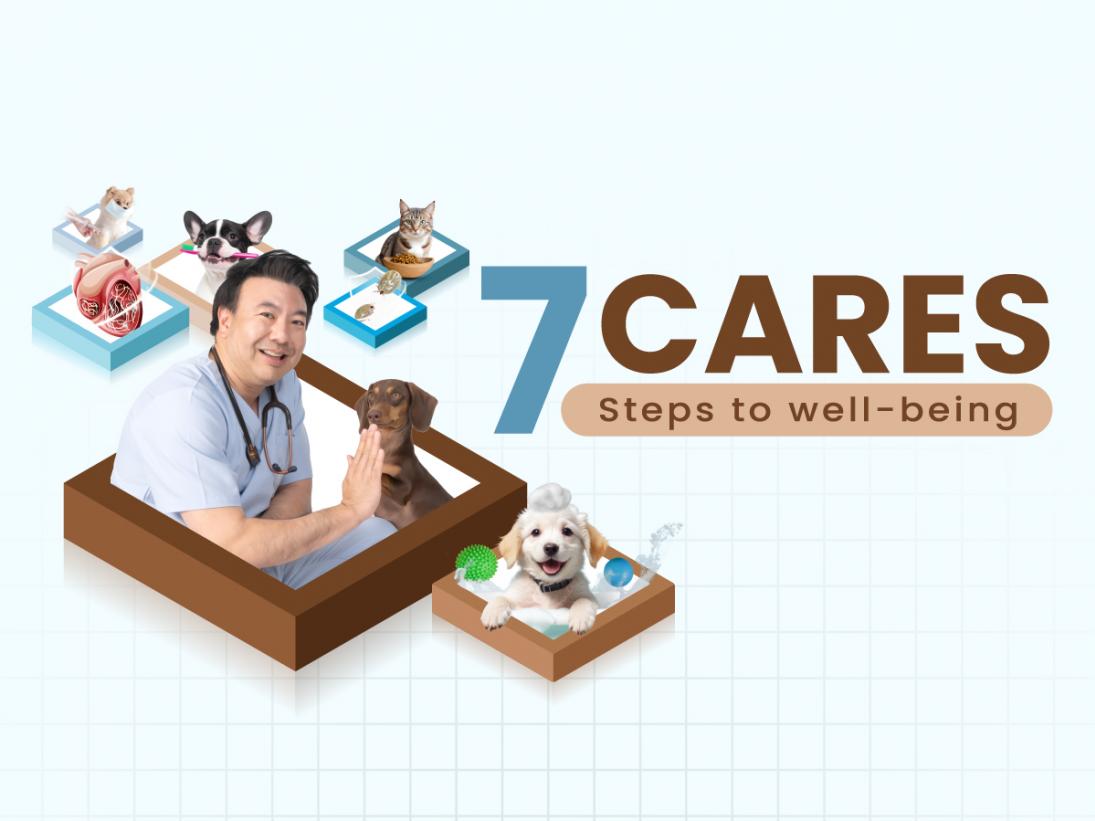
"7 CARES Steps to Well-Being"
Because pets are part of our family, here are 7 great things we can do to help us stay together for a long time.
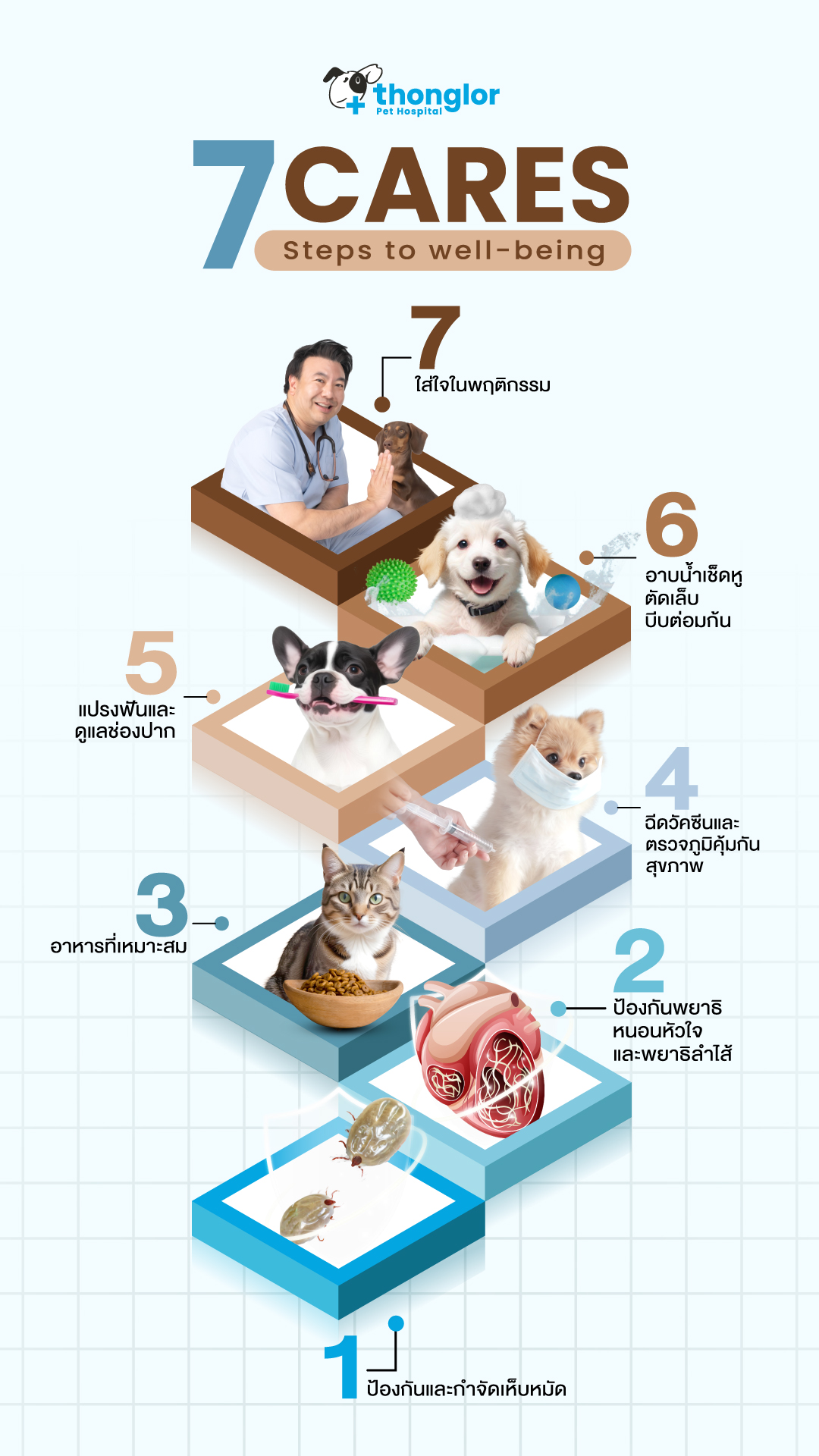
1. Tick and Flea Prevention and Control
Even though ticks and fleas are small, they can pose life-threatening danger to your pet. Let's look at what illnesses ticks and fleas can cause in your pet.
Ticks
- Anemia
- Carrier of blood parasite disease
- Dermatitis
Fleas
- Anemia
- Carrier of cucumber tapeworm (flea tapeworm)
- Flea allergy dermatitis
Tick and flea prevention should begin early for your pet's good health, so they can stay with you for a long time. You can start protecting your pet against ticks and fleas from 4 weeks of age onward.
2. Heartworm and Intestinal Parasite Prevention
Heartworm disease is caused by "mosquitoes" -- mosquitoes act as the carrier of this disease. When a mosquito bites a dog, the infective third-stage larvae enter the bloodstream tissue and travel to the heart, where they gradually develop into adult worms, eventually leading to the pet's death.
Symptoms of "Heartworm Disease" in Dogs
- Coughing, panting, difficulty breathing
- Tiring easily
- Abdominal distension
- Pale gums
- Fluid retention/swelling
Heartworm disease won't happen to your pet if you take proper care and use preventive products specifically formulated to prevent heartworm -- this is the best approach.
3. Appropriate Diet
Proper feeding for pets should be suited to their age, breed, and certain conditions, such as pregnancy in mother dogs. Choosing good, appropriate food for your pet requires considering:
- Your pet's age, physical condition, and daily activity level
- Food quantity assessed together with Body Condition Score and coat/skin condition
- Feeding method and environment, such as food quantity, number of meals, and feeding location -- all of these affect your pet's nutritional status
4. Vaccination, Immunity, and Health Screening
For pets that haven't yet received vaccinations, they should begin the vaccination program as follows:
- Puppies can begin from 1.5 months (45 days) of age onward, to build immunity to a level that can prevent disease. For dogs who have already completed their full vaccination program, an annual rabies booster is given to maintain immunity. For the combined vaccine, immunity can be checked via a blood test before vaccination.
- Kittens can begin from 2 months (60 days) of age onward, to build immunity to a level that can prevent disease. For cats who have already completed their full vaccination program, an annual rabies booster is given to maintain immunity, along with 2 doses of the combined vaccine.
- Annual health checkups allow for assessment of overall strength and organ condition, including the function of various internal systems.
5. Toothbrushing and Oral Care
Toothbrushing and a health checkup at least once a year, including dental scaling, is necessary for both dogs and cats.
- Pets younger than 9 months should see a veterinarian to check their baby teeth and newly emerging adult teeth.
- Pets age 5-12 months should see a veterinarian to check for tartar buildup and gingivitis.
- Pets older than 2 years should be checked for gingivitis, damage to tooth structure, and oral tumors.
6. Bathing, Ear Cleaning, Nail Trimming, and Anal Gland Expression
- Bathing: pets should be bathed 1-2 times a month, to prevent unpleasant odors and help avoid skin conditions.
- Ear Cleaning: cleaning the ears helps prevent ear canal inflammation. Use a product formulated specifically for ear cleaning, and clean the ear canal 1-2 times a week.
- Nail Trimming: start training your pet to accept nail trims from a young age, perhaps offering treats or toys as a reward to reduce fear. Nails should generally be trimmed every 1-2 months.
- Gland Expression: the glands beside the anus produce a scented fluid, most commonly found in dogs rather than cats. These glands should be expressed to release the fluid 1-2 times a month, for your pet's good hygiene.
7. Pay Attention to Behavior
- Behavioral training for pets can begin as early as:
- The first 1-3 weeks: handle puppies and kittens gently, to reduce stress and help lower aggression as they grow older.
- The first 2-4 weeks: introduce handling and restraint, putting on a leash, walking practice, nail-trimming practice, training them not to chew on objects, and adapting to new things (this is an important period for them to begin learning and training).
- The first 8-10 weeks: puppies begin to show fear, since this is the period when they move in with their new owner. This behavior can be helped through praise and rewards. For cats, synthetic pheromones may be used to help reduce stress and fear.
- Train puppies to stay within a designated area of the house, and get them used to being in a carrier, for occasional transport and hospital stays.
Contact Thonglor Pet Hospital
Have questions about veterinary care for your pet in Thailand? Contact our team to ask about services, find a suitable branch or arrange an appointment.
If you need English-speaking assistance, please let us know when booking so we can confirm availability.
Book an appointment: Schedule your visit
Call us: +66 2 079 9999
LINE: @jaothonglor
Find a location: Explore our branches
For information about opening hours, treatment costs and preparing for your visit, see our Frequently Asked Questions.
Related in This Category

Did You Know Dogs Can Suffer from Acid Reflux?

My Cat is Lethargic and Refusing Food: What Should I Do? A Guide to Caring for a Sick Cat

Is eating too much wet food dangerous for cats? At what age can they start?

Bad Breath in Dogs and Cats: A Warning Sign You Should Never Ignore