Cloudy Eyes Aren’t Just Old Age: Is Your Pet Developing Cataracts?

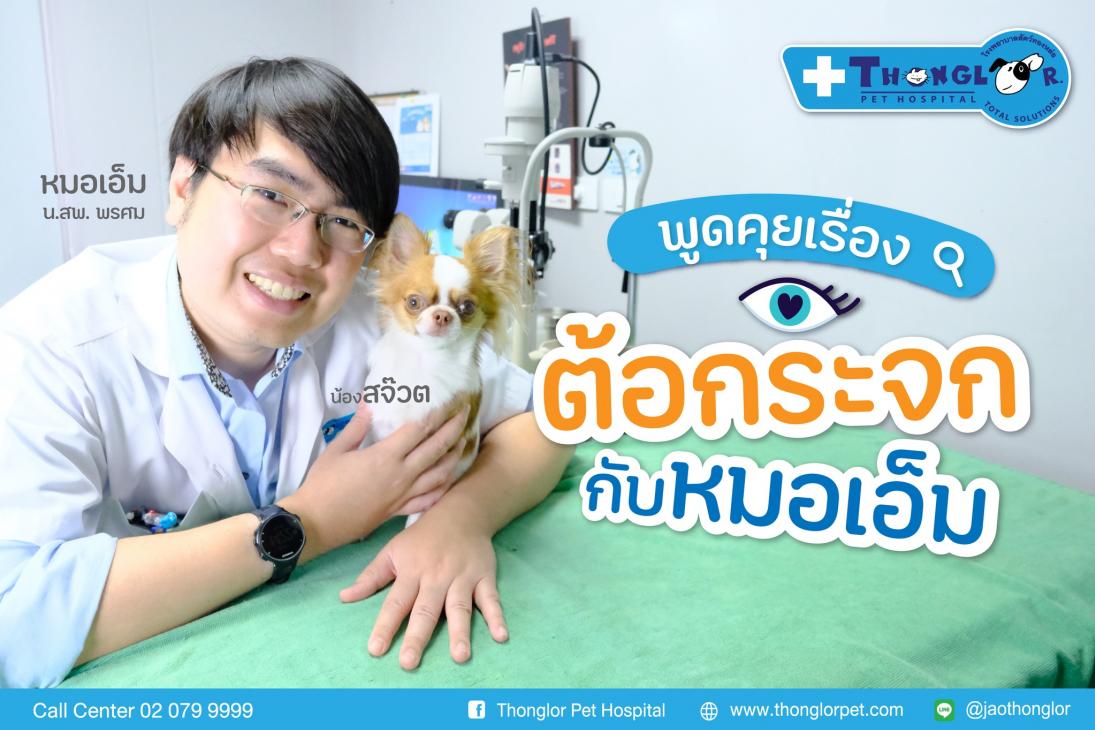
Cataracts in pets
"Cataracts in pets" is a term used to describe any opacity or cloudiness of the lens inside the eye. This condition often appears as a milky white or yellowish haze, regardless of its location within the lens or its underlying cause. It is important to note that cataracts can develop in pets of all breeds and sizes.
Today, we would like to invite everyone to discuss cataracts with Dr.Pornsom Chamnankit (Dr.M) from the Ophthalmology Clinic at Thonglor Pet Hospital.
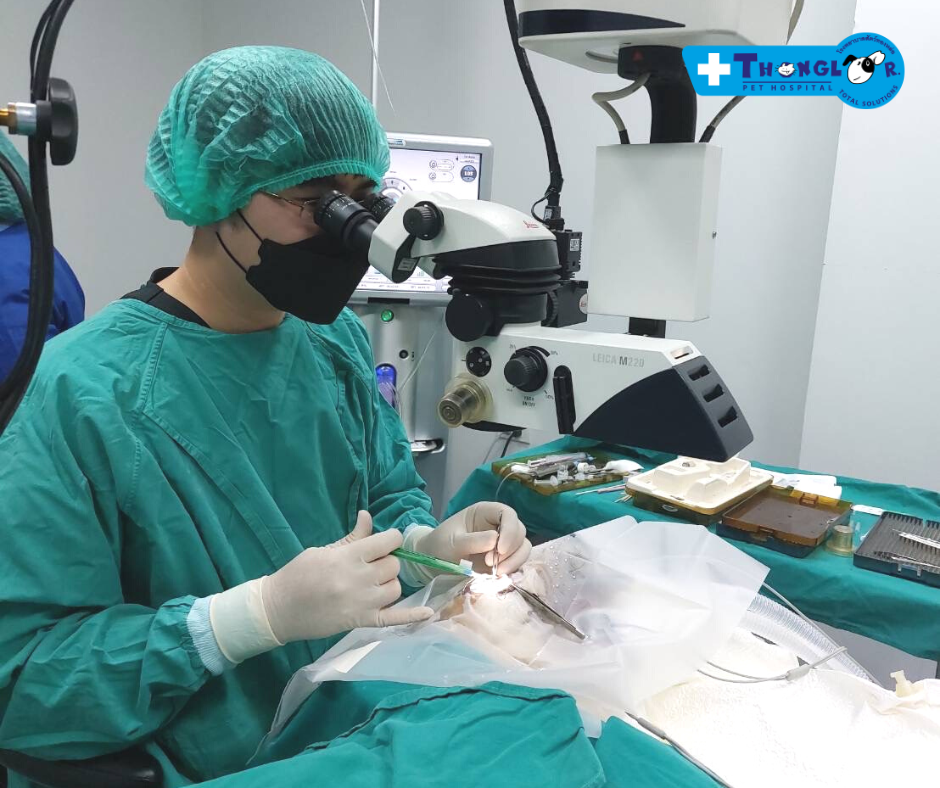
Thonglor Pet Hospital offers comprehensive screening for cataracts at every stage and provides specialized cataract surgery (Phacoemulsification). If you are concerned or notice any abnormalities in your dog or cat’s eyes, do not wait until the condition becomes chronic.
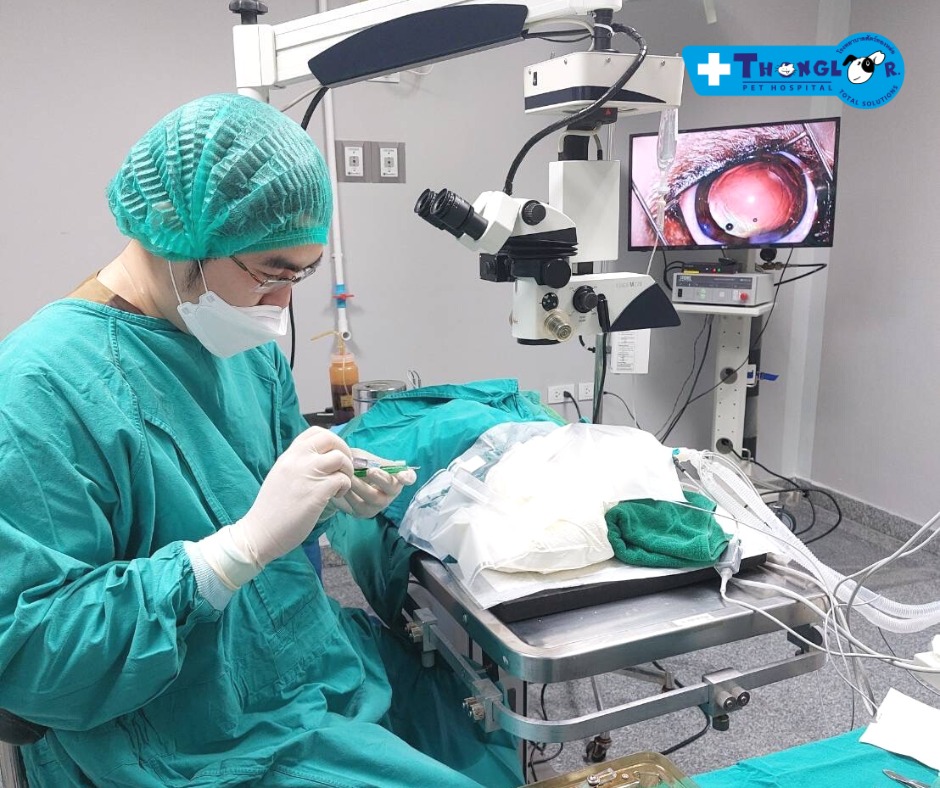
Advanced Cataract Surgery Phacoemulsification
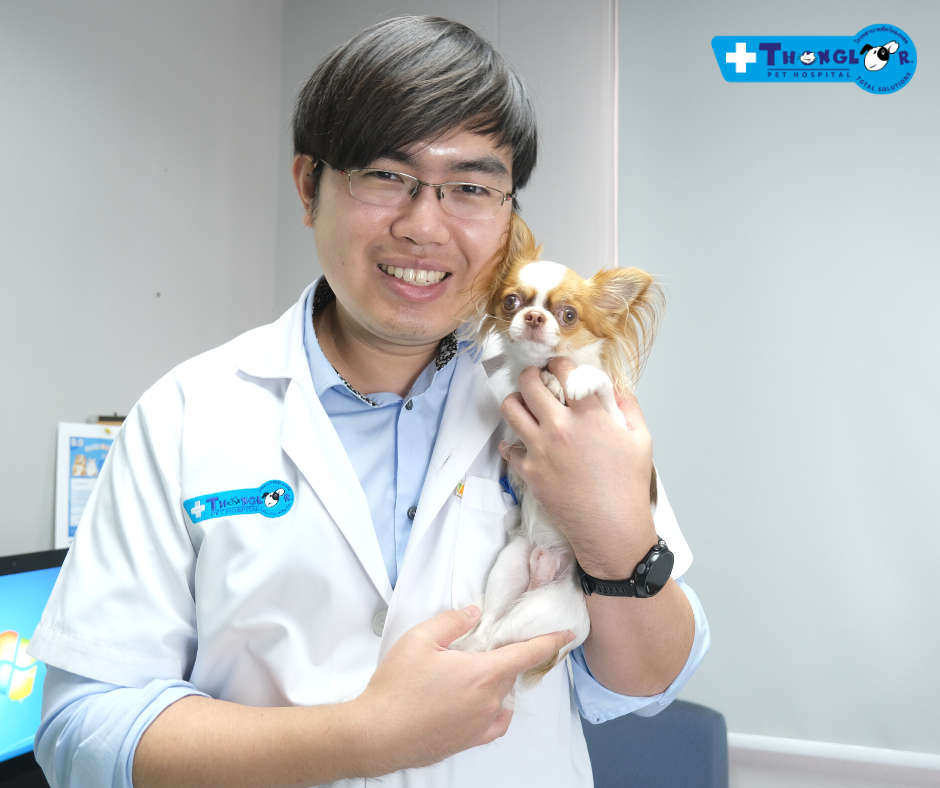
Before we dive into the details of cataracts in pets, we would like to introduce the expert who will be sharing these valuable insights with us. Dr.Pornsom Chamnankit (Dr. M) A dedicated veterinarian at the Ophthalmology Clinic, Thonglor Pet Hospital. Dr. M earned his Doctor of Veterinary Medicine (DVM) degree from Chulalongkorn University.
Currently, Dr. M serves as the Head of the Veterinary Team at the Rama 9 Branch and is a specialist at the Ophthalmology Clinic. He provides expert consultations across four major branches of Thonglor Pet Hospital
- Thonglor Pet Hospital, Rama 9
- Thonglor Pet Hospital, Sirindhorn-Pinklao
- Thonglor Pet Hospital, Ramintra
- Thonglor Pet Hospital, Pradit Manutham
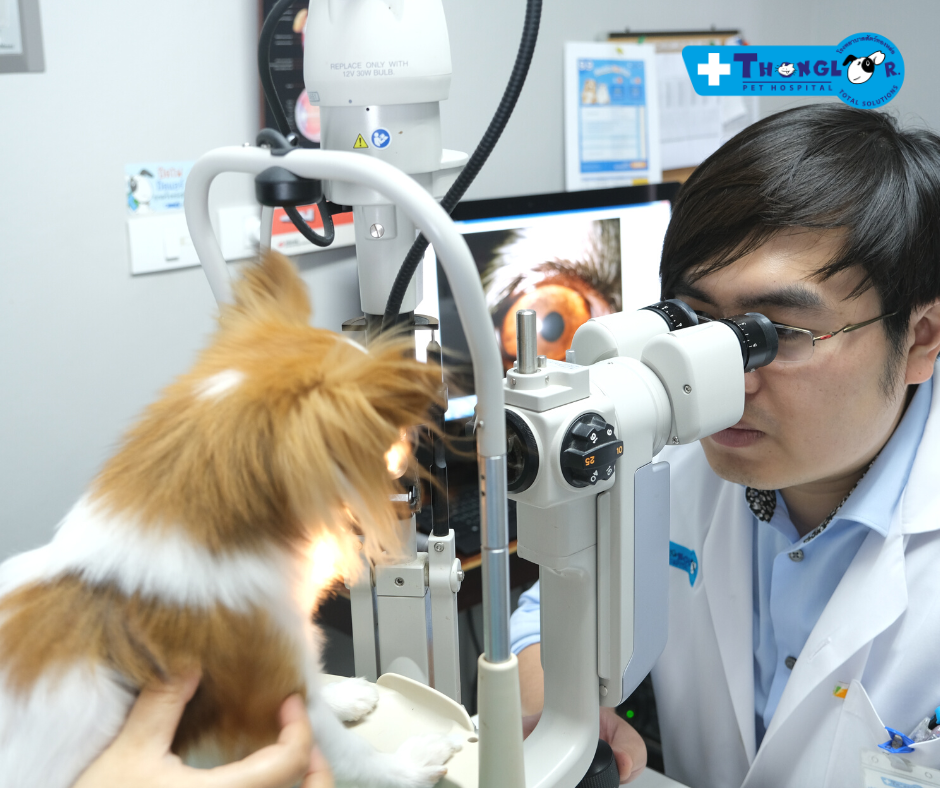
Cloudy Lenses in Dogs Two Common Conditions
1. Nuclear sclerosis
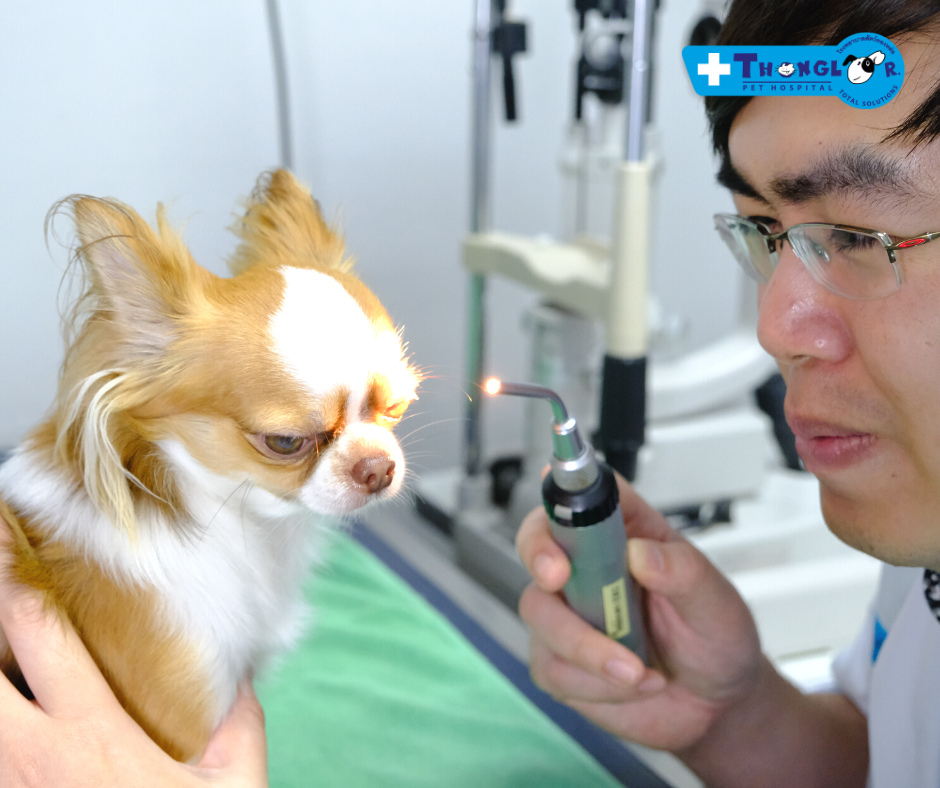
2. Cataract
Unlike Nuclear Sclerosis, cataracts can be found in pets of all ages because they can be triggered by various factors, such as
- Congenital
- Trauma
- Diabetes Mellitus
- Retinal Degeneration
- Genetics: Certain breeds are more predisposed, including Maltese, Schnauzer, Poodle, and Pomeranian.
Cataracts are classified into 4 stages based on the degree of lens opacity
- Incipient cataract
- Immature cataract
- Mature cataract
- Hypermature cataract
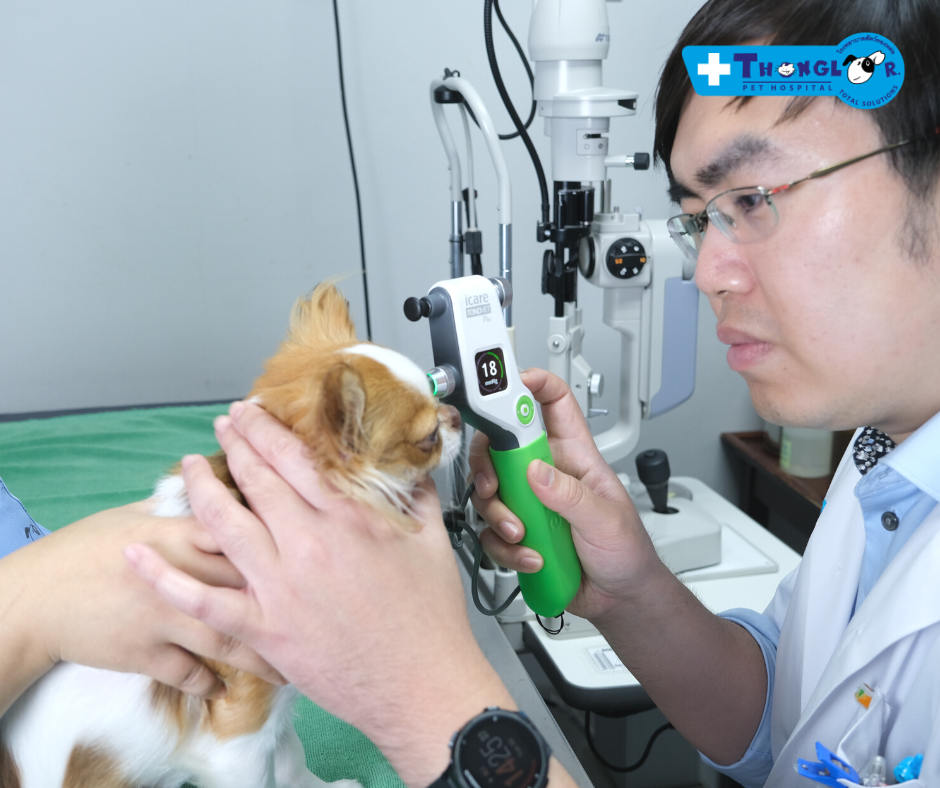
If cataracts are left untreated, they can lead to severe and painful complications, including Uveitis, Glaucoma, Lens Luxation
nitial Eye Examination An appointment to evaluate and diagnose the current stage of the cataract.
Electroretinography (ERG) A diagnostic test to measure the electrical response of the retina and assess the pet's vision potential.
Ocular Ultrasound To examine the internal structure of the eye and determine the correct size for the Intraocular Lens (IOL) to be implanted during surgery.
General Health Screening A comprehensive physical assessment, including blood work and a heart exam (cardiac screening), to evaluate anesthesia safety and minimize risks.
Currently, surgical intervention remains the most effective treatment for cataracts. The procedure involves removing the cloudy natural lens and replacing it with an Intraocular Lens (IOL). At Thonglor Pet Hospital, we utilize Phacoemulsification, an advanced technique that uses high-frequency ultrasonic waves to break up the cataract. This is the exact same medical standard used in human cataract surgery, ensuring the highest level of precision and safety for your pet.
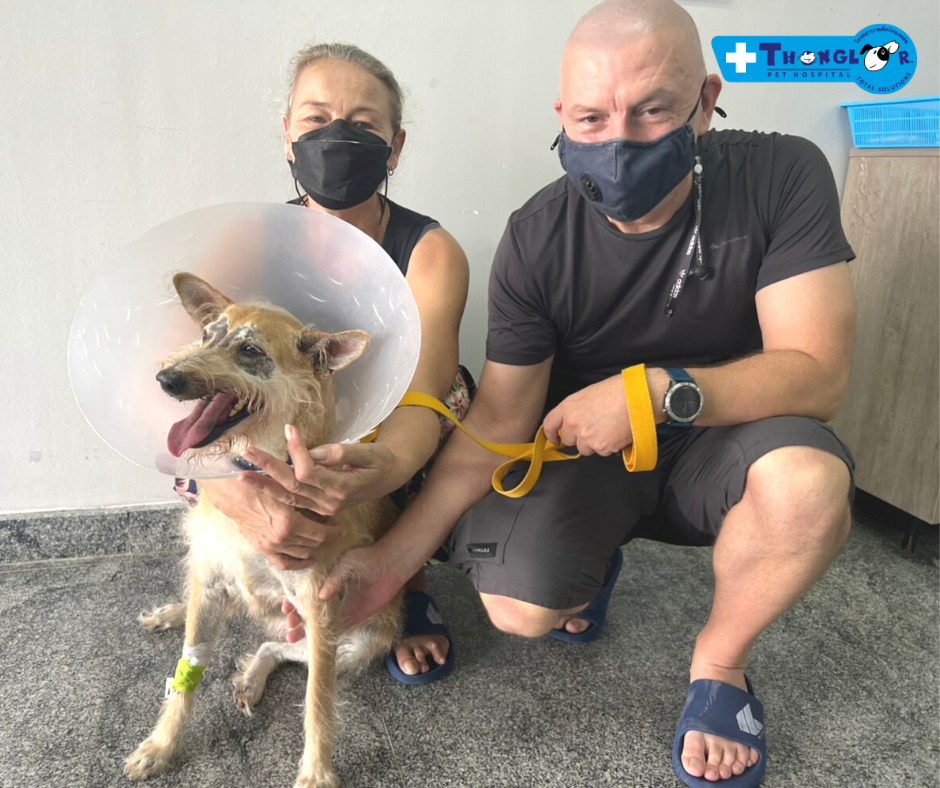
This is the touching story of Bella and her successful cataract surgery with Dr. M. Bella was rescued by the Jacksons, an expatriate couple who shared that she had been living in total darkness for about two years before they found her. "During the time we’ve lived together, we constantly had to make sounds as signals just so Bella would know we were nearby," the Jacksons recalled. Driven by hope, they decided to make the long drive from Nakhon Si Thammarat to Thonglor Pet Hospital, dreaming of the day Bella might see again.
That miracle finally became a reality. After two years of darkness, Bella’s sight was restored. "We can see a newfound confidence in her now that she can see the world again," the couple said with joy. Deeply impressed by Dr. M and the entire team at Thonglor Pet Hospital, the Jacksons shared that they plan to return every year for Bella’s routine health check-ups.
Contact Thonglor Pet Hospital
Have questions about veterinary care for your pet in Thailand? Contact our team to ask about services, find a suitable branch or arrange an appointment.
If you need English-speaking assistance, please let us know when booking so we can confirm availability.
Book an appointment: Schedule your visit
Call us: +66 2 079 9999
LINE: @jaothonglor
Find a location: Explore our branches
For information about opening hours, treatment costs and preparing for your visit, see our Frequently Asked Questions.
ข้อมูลโดย

Related in This Category

Did You Know Dogs Can Suffer from Acid Reflux?
My Cat is Lethargic and Refusing Food: What Should I Do? A Guide to Caring for a Sick Cat
Is eating too much wet food dangerous for cats? At what age can they start?
Bad Breath in Dogs and Cats: A Warning Sign You Should Never Ignore